What processor is good for Mobile App Gaming?
Choosing the right processor is one of the most important decisions when buying a smartphone for gaming. A powerful processor can make games run smoothly, improve graphics quality, reduce loading times, and provide a more enjoyable experience. Whether someone enjoys casual mobile games or competitive multiplayer titles, the processor has a major influence on overall performance. Understanding which processor is suitable for Mobile App Gaming can help buyers select a smartphone that offers the right balance of speed, efficiency, and affordability.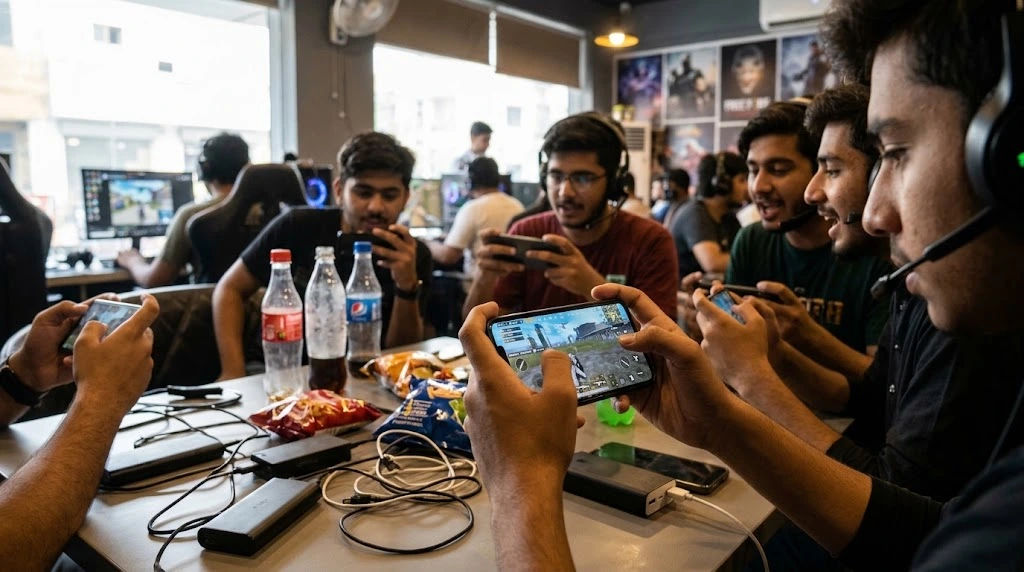
Smartphone processors have become increasingly advanced, offering features that were once available only in dedicated gaming devices. Modern chipsets include powerful CPU cores, graphics processing units, artificial intelligence engines, and advanced power management systems. These components work together to handle demanding games while maintaining stable performance.
However, not every expensive processor is necessary for every player. Some users mainly play simple puzzle games, while others enjoy graphics-intensive racing, shooting, and multiplayer games. The best processor depends on the types of games someone plays, their performance expectations, and their smartphone budget.
This comprehensive guide explains the most important processor features, popular chipset options, and factors to consider when choosing a smartphone for gaming.
The Role of a Smartphone Processor
A smartphone processor, commonly called a System on a Chip (SoC), is the central component responsible for handling different computing tasks. It manages applications, processes instructions, controls graphics, and coordinates communication between hardware components.
When a person opens a mobile game, the processor handles several operations simultaneously. It calculates character movements, processes game physics, manages background tasks, and communicates with the graphics unit.
A capable processor allows these operations to happen quickly and efficiently.
What Does a Processor Do During Gaming?
A processor performs several important functions while a game is running.
-
Game calculations: It handles movement, physics, and other gameplay mechanics.
-
Graphics coordination: It works with the GPU to produce smooth visuals.
-
Application management: It helps games load and respond quickly.
-
Background processing: It manages notifications and other system activities.
-
Power management: It helps balance performance and battery consumption.
A weak processor may struggle with demanding games, causing slow loading, delayed responses, and inconsistent frame rates.
Why Processor Quality Matters
Processor quality directly influences the gaming experience. A modern chipset can handle complicated game environments, detailed textures, and multiple tasks more effectively.
Mobile App Gaming pkr98 also helps maintain consistent performance during longer gaming sessions. However, performance depends on other smartphone components, including RAM, cooling technology, storage, and display quality.
Therefore, buyers should consider the complete smartphone configuration instead of choosing a device based only on its processor name.
Best Processors for Mobile App Gaming
Several processor families offer excellent gaming performance. Some are designed for premium smartphones, while others provide impressive capabilities at more affordable prices.
Understanding their strengths makes it easier to identify the right option.
Qualcomm Snapdragon Processors
Qualcomm Snapdragon processors are popular among smartphone manufacturers because they offer strong CPU and GPU performance.
The premium Snapdragon series is particularly suitable for demanding games. These processors typically feature powerful CPU cores, advanced Adreno graphics, and sophisticated power management.
High-end examples include the Snapdragon 8 Elite and Snapdragon 8 Elite Gen 5. Their performance capabilities make them suitable for smartphones designed for intensive gaming and multitasking.
Benefits include:
-
Strong graphics processing.
-
Excellent performance in demanding games.
-
Support for advanced gaming technologies.
-
Efficient power management.
-
Good compatibility with modern Android applications.
Snapdragon processors are particularly attractive to players who enjoy competitive games, high-quality graphics, and demanding multiplayer experiences.
MediaTek Dimensity Processors
MediaTek Dimensity processors have become strong competitors in the smartphone market.
The Dimensity family includes affordable, midrange, and flagship chipsets. This gives buyers several choices depending on their budgets.
Premium models, such as the Dimensity 9500, offer powerful CPU and GPU capabilities for demanding gaming applications.
Midrange options can also provide excellent performance for everyday gaming.
Important advantages include:
-
Competitive processing speeds.
-
Strong graphics capabilities.
-
Efficient energy consumption.
-
Support for modern connectivity technologies.
-
Attractive performance-to-price ratios.
For buyers who want powerful gaming performance without necessarily purchasing the most expensive smartphone, Dimensity processors are worth considering.
Apple A-Series Processors
Apple develops its own processors for iPhones, and its A-series chips are known for strong performance and efficient hardware-software integration.
Recent generations, including the A19 Pro, offer advanced CPU and GPU capabilities.
One major advantage of Apple's processors is their integration with iOS. Apple controls both the hardware and operating system, allowing developers to optimize applications for supported devices.
Benefits include:
-
Powerful single-core performance.
-
Strong graphics capabilities.
-
Efficient application processing.
-
Excellent software optimization.
-
Consistent performance across supported applications.
iPhones can provide an excellent gaming experience, particularly for users who prefer Apple's ecosystem.
Samsung Exynos Processors
Samsung's Exynos processors are another option in the smartphone market.
Different Exynos generations offer different performance levels. Modern flagship versions include advanced CPU technology and graphics capabilities.
The Exynos 2500, for example, is designed for premium smartphone applications and demanding workloads.
Potential advantages include:
-
Advanced processing architecture.
-
Modern graphics technology.
-
Efficient power management.
-
Integration with Samsung smartphones.
-
Support for demanding applications.
Buyers should compare the performance of the specific Exynos model with competing Snapdragon and Dimensity chipsets rather than assuming every processor in the family performs equally well.
Important Processor Features for Gaming
A processor's model name does not tell the complete story. Several technical features determine how effectively a chipset handles demanding games.
Central Processing Unit (CPU)
The CPU handles instructions and calculations required by games and applications.
A powerful CPU can improve loading times, manage complex game mechanics, and support multitasking.
Most modern smartphone processors contain multiple CPU cores. These cores are designed to handle different workloads.
Performance cores manage demanding tasks, while efficiency cores handle lighter activities using less energy.
This combination helps smartphones maintain responsiveness without unnecessarily draining the battery.
Graphics Processing Unit (GPU)
The GPU is particularly important for gaming because it renders visual elements.
It processes textures, lighting, shadows, animations, and other graphical details.
A powerful GPU can improve:
-
Visual quality.
-
Frame rates.
-
Graphics stability.
-
Texture rendering.
-
Complex visual effects.
For players who enjoy racing games, action titles, and realistic environments, GPU performance deserves particular attention.
A powerful CPU cannot completely compensate for a weak GPU when a game requires intensive graphics processing.
Clock Speed
Clock speed measures how quickly a processor can execute certain operations. It is commonly expressed in gigahertz (GHz).
Higher clock speeds can improve performance in some situations, but they do not automatically mean that one processor is better than another.
Architecture, core design, thermal limits, and software optimization also influence performance.
For this reason, buyers should compare real-world gaming tests instead of relying entirely on advertised clock speeds.
Processor Architecture
Processor architecture describes how the chipset is designed to execute instructions and manage resources.
Newer architectures often improve performance and energy efficiency.
A modern processor may complete tasks faster while consuming less power than an older chipset.
This is particularly useful during extended gaming sessions, when both performance and battery efficiency matter.
How Much Processor Power Do Different Games Need?
Not every game requires flagship-level hardware. The processor requirement depends on the game's graphics, complexity, and online features.
Casual and Puzzle Games
Casual games generally have relatively modest processing requirements.
Examples include simple puzzle games, card games, word games, and basic arcade titles.
An entry-level or lower-midrange processor can usually handle these applications comfortably.
Players do not necessarily need an expensive smartphone for this category.
Multiplayer and Competitive Games
Competitive games require more consistent performance and responsive controls.
Games involving multiple players, fast movement, and detailed environments can place greater demands on the CPU and GPU.
A strong midrange or flagship processor is generally a better choice.
Stable frame rates are especially important because sudden performance drops can affect gameplay.
Graphics-Intensive Games
Some mobile games feature realistic environments, detailed characters, advanced lighting, and complex animations.
These titles benefit significantly from powerful processors.
Flagship Snapdragon, Dimensity, and Apple A-series chipsets are suitable options for users who want high graphical settings and smoother performance.
However, the actual experience also depends on the game's optimization and the smartphone's cooling system.
Choosing the Right Processor According to Budget
A suitable gaming processor does not always have to be the most expensive option.
The best purchase is one that matches gaming requirements and available spending.
Entry-Level Smartphones
Entry-level smartphones are suitable for casual games and everyday applications.
They commonly use affordable processors designed for basic computing tasks.
These chipsets can handle simple games, but demanding titles may require reduced graphics settings.
Buyers should prioritize reasonable CPU and GPU performance rather than choosing a device simply because it has a large storage capacity.
Midrange Smartphones
Midrange processors offer a good balance between price and performance.
They can handle many popular games at moderate or high graphics settings, depending on the chipset and game.
This category is often suitable for students, casual gamers, and people who want reliable everyday performance.
Popular options from the Snapdragon 7 series and MediaTek Dimensity 8000 and 7000 families are worth comparing.
Flagship Smartphones
Flagship smartphones are designed for users who expect premium performance.
They generally feature advanced processors, powerful GPUs, faster memory, and improved cooling systems.
These devices are suitable for demanding games and intensive multitasking.
However, flagship hardware may be unnecessary for someone who mainly plays lightweight games.
Other Smartphone Features That Affect Gaming Performance
Even an excellent processor cannot guarantee a smooth experience if the remaining smartphone hardware is inadequate.
Several additional components influence overall gaming performance.
RAM Capacity
RAM temporarily stores information that applications need while running.
A smartphone with sufficient RAM can manage games and background applications more effectively.
For most modern gaming users, 8GB of RAM is a practical starting point. Devices with 12GB or more may offer additional flexibility for demanding applications and multitasking.
However, more RAM does not automatically improve frame rates if the processor or GPU is the main limitation.
Cooling System
Heat is one of the biggest challenges during intensive gaming.
When a processor becomes too hot, the smartphone may reduce its performance to protect internal components. This process is called thermal throttling.
Gaming smartphones often use vapor chambers, graphite sheets, and other cooling technologies to manage heat.
An effective cooling system helps maintain more stable performance during extended sessions.
Display Refresh Rate
A display's refresh rate measures how many times the screen updates every second.
Common smartphone displays offer 60Hz, 90Hz, 120Hz, or higher refresh rates.
A 120Hz display can provide smoother motion when the game supports higher frame rates.
However, a high refresh rate does not guarantee better performance if the processor cannot produce enough frames.
Battery and Charging Technology
Gaming can consume considerable battery power, especially when using high brightness, demanding graphics, and fast refresh rates.
A smartphone with a large battery can support longer gaming sessions.
Fast charging can also reduce interruptions.
However, buyers should remember that intensive gaming while charging may increase heat, depending on the device's design.
Storage Technology
Storage affects how quickly games install, launch, and load their resources.
Modern UFS storage is generally faster than older eMMC technology.
A smartphone with fast storage can provide a more responsive experience, particularly when handling large game files.
Sufficient storage capacity is also important because modern games can require substantial installation space and updates.
How to Compare Processors Before Buying
Choosing between different chipsets can be confusing, especially when manufacturers advertise impressive specifications.
A few practical comparison methods can help buyers make better decisions.
Check Real-World Gaming Benchmarks
Benchmark results provide useful information about processor performance.
However, synthetic benchmark scores should not be the only deciding factor.
Look for gaming tests that measure:
-
Average frame rates.
-
Frame-rate stability.
-
Temperature during gameplay.
-
Battery consumption.
-
Performance after extended use.
These results provide a clearer picture of how a smartphone performs under actual gaming conditions.
Compare GPU Performance
Two processors may have similar CPU speeds but different graphics capabilities.
Since many modern games rely heavily on graphics processing, GPU comparisons are essential.
Check whether the chipset can support the graphics settings and frame rates you expect.
Consider Software Optimization
A well-optimized smartphone can sometimes deliver a better gaming experience than a device with theoretically stronger hardware.
Manufacturers regularly release software updates that improve stability, compatibility, and energy management.
Game developers also optimize their applications for different processors and operating systems.
Therefore, software support should be part of the purchasing decision.
Check Long-Term Performance
A processor should provide reliable performance beyond the first few months of ownership.
Look for smartphones with effective cooling, regular software updates, and good battery management.
A device that performs consistently over long sessions can be a better investment than one that delivers impressive short-term benchmark scores but overheats quickly.
Common Mistakes to Avoid When Choosing a Gaming Processor
Some buyers focus on specifications without understanding how they affect actual gameplay.
Avoiding a few common mistakes can make the purchasing process easier.
Choosing Only by Clock Speed
A higher clock speed does not automatically indicate a faster processor.
CPU architecture, GPU capabilities, and thermal management also matter.
Compare complete chipset specifications and independent performance tests.
Ignoring Thermal Throttling
A smartphone might deliver excellent performance during short tests but struggle after extended gaming.
Always consider cooling technology and sustained performance.
Assuming More RAM Solves Everything
RAM is important, but it cannot replace a capable CPU or GPU.
A balanced smartphone configuration is usually more valuable than investing in one specification alone.
Buying an Expensive Phone Without Considering Gaming Needs
Not every player needs a premium flagship smartphone.
Someone who mainly enjoys casual games may be perfectly comfortable with a reliable midrange device.
Understanding personal requirements can prevent unnecessary spending.
Tips for Getting Better Gaming Performance From Your Smartphone
Even a smartphone with a good processor benefits from sensible usage habits.
A few adjustments can improve the overall experience.
Keep software updated: Install official system and game updates to benefit from performance improvements and bug fixes.
Close unnecessary background applications: Reducing unnecessary background activity can free up system resources.
Avoid excessive heat: Do not leave the smartphone in direct sunlight or use it in extremely hot environments.
Adjust graphics settings: Lowering demanding visual settings can improve frame-rate stability.
Maintain sufficient storage: Keep enough free storage space for updates and normal system operations.
Use reliable charging accessories: Quality charging equipment helps maintain safe and dependable charging performance.
Take breaks during long sessions: Allowing the device to cool down can help reduce excessive heat buildup.
These practices cannot transform a weak processor into a flagship chipset, but they can help a smartphone deliver more consistent performance.
Conclusion
Choosing the right processor is essential for enjoying smooth, responsive, and reliable gaming on a smartphone. The best option depends on the types of games someone enjoys, their budget, and their expectations regarding graphics quality and performance.
Qualcomm Snapdragon processors are strong choices for users who want powerful Android gaming performance. MediaTek Dimensity chipsets offer competitive alternatives across several price categories. Apple's A-series processors provide excellent performance through close hardware and software integration, while modern Samsung Exynos processors also offer capable options.
For casual players, an affordable processor may provide everything necessary for everyday entertainment. Midrange chipsets are suitable for users who enjoy popular multiplayer games and want a good balance between price and performance. Enthusiasts who prefer demanding graphics, higher frame rates, and intensive applications may benefit from flagship processors.
However, the processor should never be considered in isolation. GPU performance, RAM, cooling technology, battery capacity, display refresh rate, and storage speed all contribute to the overall experience.
Before purchasing a smartphone, compare independent gaming benchmarks, sustained performance, and thermal management. Consider the games you actually play instead of paying extra for specifications you may never use.
Ultimately, a good processor is one that delivers dependable performance without unnecessary compromises. By understanding these features and comparing available options carefully, buyers can choose a smartphone that meets their gaming needs and provides lasting value.